


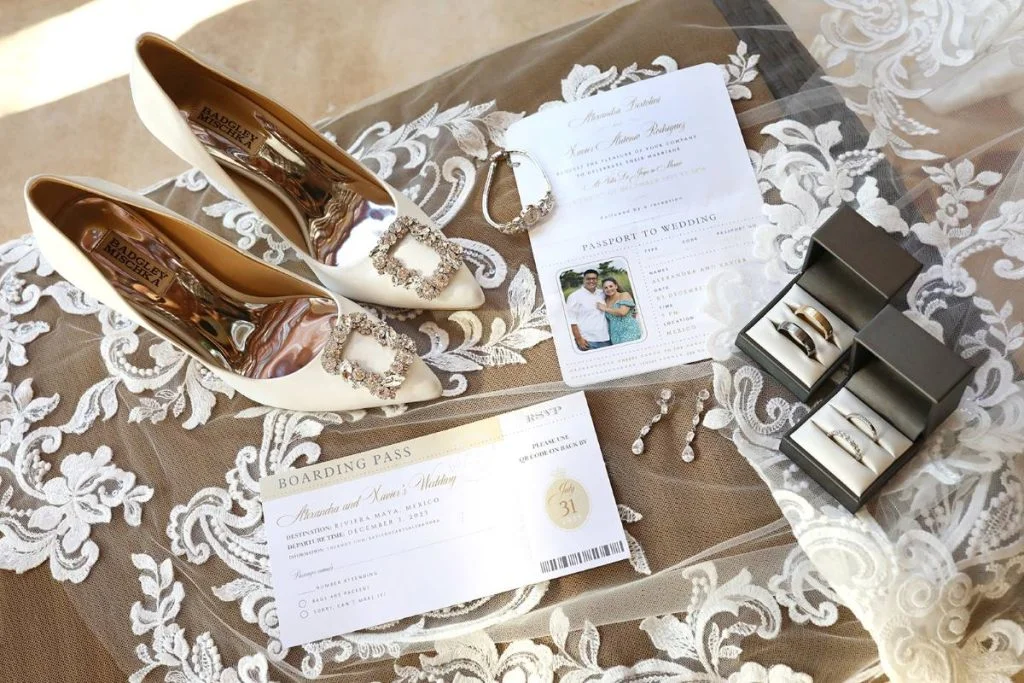
Wedding stationery does far more than share a date and a location. It’s the first glimpse your guests get of your celebration, setting the tone long before anyone walks down the aisle. From the save the date that arrives months in advance to the thank-you card that follows the honeymoon, each piece plays a role in telling your story and keeping your guests informed. Knowing what you need, and when, makes the process much easier and helps you create stationery that’s both beautiful and practical.
Save the Dates
Save the dates are usually the first piece of wedding stationery your guests receive. Their purpose is simple: to let people know your wedding date and location so they can plan ahead. They’re especially important for destination weddings, holiday weekends or events where many guests will need to travel.
Most couples send save the dates six to eight months before the wedding, or up to a year in advance for destination celebrations. They can be more casual and playful than your invitations. Many couples use an engagement photo, a fun design or a magnet. Only send save the dates to guests you’re certain you’ll invite, since everyone who receives one will expect an invitation.
The Wedding Invitation
The invitation is the heart of your stationery suite. It formally invites guests and includes the key details: the names of the couple, the hosts, the date, the time and the ceremony location. Invitations are typically sent six to eight weeks before the wedding, or around three months ahead for destination weddings.
Your invitation’s design should reflect the style of your celebration. Thick cardstock, elegant fonts and classic layouts suggest a formal event, while bold colors, modern typography or hand-drawn illustrations feel more relaxed and contemporary. Printing methods add to the effect. Letterpress creates a pressed, textured finish, foil stamping adds shimmer, and digital printing offers flexibility at a more affordable price.
When it comes to wording, clarity matters most. Make sure names are spelled correctly, dates and times are accurate, and the location is easy to understand. Always ask several people to proofread your invitation before it goes to print.
Enclosure Cards
Enclosure cards hold the extra information that doesn’t fit on the main invitation. They keep the invitation itself clean and uncluttered while still giving guests everything they need.
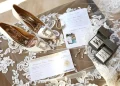
The most important enclosure is the RSVP card, which asks guests to confirm whether they’ll attend and may include meal choices or space for dietary needs. Many suites also include a details card covering the reception venue, accommodations, transportation, dress code or the wedding website. Couples with complicated venues or many out-of-town guests often add a map or directions card. Because enclosure cards are usually smaller than the invitation, they work best with simple, easy-to-read designs that match the rest of the suite.
Envelopes, Liners and Finishing Touches
The envelope is the very first thing guests see, so it’s worth giving it some attention. Details such as envelope liners, wax seals, ribbon, belly bands or vellum wraps can make a suite feel special as soon as it’s opened. Addressing also matters. Hand calligraphy feels luxurious and personal, while printed addressing offers a clean, consistent look and saves time.
Before mailing, take one complete invitation suite to the post office to be weighed. Thick paper, multiple enclosures and embellishments can increase postage, and square envelopes or wax seals may require extra fees.
Day-of Stationery
Wedding stationery doesn’t stop once the invitations are mailed. On the wedding day itself, stationery helps guests find their way and adds polish to the celebration. Common pieces include ceremony programs, welcome signs, seating charts, escort cards, place cards, table numbers and menus. Designing these items to match your invitations creates a cohesive look from the first envelope to the last dance.
Thank-You Cards
Thank-you cards complete the stationery journey. Sending a handwritten note shows appreciation for your guests’ time, travel and gifts. Etiquette suggests sending thank-you cards within about three months of the wedding. Gifts received before the wedding should be acknowledged within a few weeks. A short, personal message mentioning the specific gift and thanking the guest for celebrating with you goes a long way.
Planning Your Stationery Budget and Timeline
Stationery costs can vary widely depending on paper, printing method, quantity and embellishments. Setting a budget early helps you prioritize. Many couples spend more on the invitation itself and keep enclosures and day-of pieces simpler. Ordering a few extra invitations is always wise, since you’ll want spares for last-minute guests, mistakes and keepsakes.
Timing is just as important. Custom designs often need several weeks for design, proofing and printing, so begin the process about four to six months before the wedding. This leaves plenty of time for revisions, addressing and mailing without added stress.
Final Thoughts
Wedding stationery is one of the most personal parts of wedding planning. Each piece, from the save the date to the thank-you card, helps share your story, guide your guests and reflect the style of your celebration. With thoughtful design, clear wording and a well-planned timeline, your stationery will set the stage for an unforgettable day and become a keepsake you’ll treasure long after the wedding is over.