


The allure of royal courts has long dictated the trajectory of personal adornment. Throughout history, monarchs and aristocrats used fine jewelry not merely as decorative accents, but as potent declarations of power, lineage, and artistic connoisseurship. In the contemporary fashion landscape, this aristocratic legacy is experiencing a significant renaissance. Modern designers are increasingly looking backward, drawing deep inspiration from the historical archives of European, Asian, and Middle Eastern royal houses to create pieces that blend historical gravity with contemporary wearability.
This resurgence goes beyond mere replication. Today’s jewelry collectors seek items that carry a sense of narrative weight. The sterile minimalism that dominated the early decades of the twenty-first century is giving way to maximalist expressions, characterized by intricate metalwork, substantial gemstone settings, and symbolic motifs. By understanding the historical roots of these trends, one can better appreciate how vintage royalty continues to influence modern luxury.
The Renaissance of Statement Tiaras and Crown Motifs
While fully realized crowns remain sequestered in state museums, their design architecture has trickled down into commercial high jewelry. The modern interpretation focuses on converting these traditional symbols of ultimate authority into versatile statements for formal occasions.
Headpieces as Modern Sculptures
The contemporary adoption of head adornments has shifted from rigid, heavy frames to flexible, lightweight masterpieces. Designers utilize lightweight titanium or platinum filigree to create headbands and tiaras that sit comfortably on the head. These pieces frequently feature modular engineering, allowing the central elements to detach and transform into a standalone necklace or a pair of brooches. The visual inspiration draws heavily from the Belle Epoque era, utilizing laurel leaf, garland, and feather patterns encrusted with micro-pave diamonds.
Crest and Coronet Details
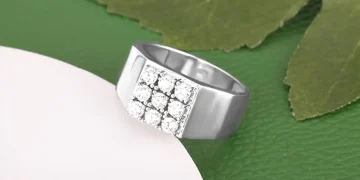
Smaller expressions of royal lineage appear in the subtle integration of coronet shapes into everyday jewelry. Stackable rings featuring pointed arch peaks mimic the silhouette of a royal crown when viewed from the side. Signet rings, historically used by nobility to seal official state documents with hot wax, are also seeing a massive revival. Modern consumers utilize these flat-surfaced gold rings to engrave personalized family crests, historical monograms, or astrological configurations, reclaiming a tradition once reserved strictly for the ruling class.
The Return of Royal Color Palettes: Saturated Gemstones
For generations, the value of royal jewelry collections was measured by the purity and scale of their colored precious stones. Unlike the modern preference for uniform white diamonds, historic rulers favored deeply saturated, emotionally resonant gems that could be spotted from across a grand banquet hall.
The Big Three Resurgence
The cornerstone of any royal-inspired collection relies on diamonds paired with the traditional trio of precious colored stones:
-
Velvet Blue Sapphires: Reminiscent of the French Bourbon dynasties and the British royal family, sapphires signify fidelity and divine favor. Current trends favor deep cornflower blue tones set in yellow gold to create a stark, historic contrast.
-
Pigeon Blood Rubies: Historically revered in Imperial Russian and Asian courts, the rich crimson hue of high-grade rubies symbolizes passion, vitality, and absolute power. Modern settings favor cushion cuts that mimic the hand-faceted stones of the eighteenth century.
-
Vivid Green Emeralds: Celebrated by Romanov Empresses and Mughal Emperors alike, emeralds offer a lush, organic opulence. The demand for Colombian emeralds featuring natural inclusions, historically referred to as the garden of the stone, highlights a shift toward celebrating natural imperfection over synthetic uniformity.
The Opulence of Baroque Pearls
Perfect, spherical pearls were incredibly rare before the advent of modern culturing techniques. Consequently, historic monarchs frequently wore asymmetric, uniquely shaped baroque pearls, utilizing their organic contours to create whimsical figurative jewelry. The current trend embraces this exact irregularity. Massive, misshapen South Sea and freshwater pearls are being paired with rough-textured gold findings, ensuring that no two pieces are identical and echoing the raw luxury of the Renaissance courts.
Intricate Metalwork: Filigree, Granulation, and Repousse
A defining feature of royal jewelry from antiquity through the nineteenth century is the sheer density of labor visible in the metalwork. Before industrial stamping machines existed, every millimeter of gold had to be manipulated by hand using specialized tools. Modern royal-inspired jewelry honors this dedication through the revival of ancient goldsmithing techniques.
Etruscan Granulation and Cannetille
Granulation involves fusing thousands of microscopic gold spheres onto a solid metal surface to create intricate geometric textures. Cannetille, a technique that gained massive popularity in the early nineteenth century French court, utilizes tightly wound spirals of fine gold wire to create three-dimensional, lace-like structures. Both methods allow designers to create large, visually impactful earrings and medallions that remain remarkably lightweight and breathable to wear, perfectly blending historic grandeur with modern comfort.
Repousse and Chasing
Repousse is the process of hammering metal from the reverse side to create a raised design in low relief, while chasing refines the detail from the front surface. This technique gives cuffs, lockets, and heavy pendant necklaces a distinct, sculptural quality. The resulting texture catches the light unevenly, giving the gold an aged, heirloom patina that looks as though it was unearthed from a royal tomb rather than purchased from a contemporary boutique.
Symbolic Motifs and Secret Compartments
Royal jewelry was rarely purely decorative; it almost always carried hidden meanings, political alliances, or deeply personal sentiments hidden away from public view.
The Revival of Acrostic and Locket Jewelry
In the nineteenth century, romantic royal courts popularized acrostic jewelry, where the first letter of each gemstone set into a ring spelled out a secret word of endearment, such as using a Ruby, Emerald, Garnet, Amethyst, Ruby, and Diamond to spell out Regard. Modern designers are reintroducing this playful, sentimental trend, allowing clients to customize bespoke pieces with hidden messages using precious minerals. Similarly, structural lockets designed to hold miniature hand-painted portraits or woven locks of hair are being reimagined to hold modern mementos, bridging the gap between historical sentimentality and contemporary life.
Sovereign Heraldry and Naturalism
Nature motifs within royal jewelry collections traditionally carried deep allegorical meanings:
-
The Royal Bee: A symbol of industry, immortality, and resurrection, famously adopted by Emperor Napoleon Bonaparte to validate his imperial status.
-
The Imperial Serpent: Popularized by Queen Victoria upon her engagement, the snake devouring its own tail represents eternal love, continuity, and wisdom, making it a highly sought-after motif for modern engagement and anniversary bands.
-
Fleur-de-lis and Stylized Lilies: Long associated with French royalty, this stylized floral motif continues to appear as a structural element in drop earrings and sophisticated brooches.
Structural Anatomy of a Royal Collection
To understand how these diverse historic elements translate into a cohesive modern wardrobe, it helps to look at the typical item categories that define the royal aesthetic:
| Item Category | Historic Origin | Modern Design Transformation | Ideal Styling Approach |
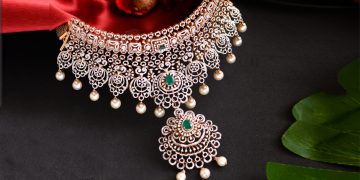
| Choker Necklaces | Victorian and Edwardian Eras | Multi-strand pearls with a central gemstone plaque | Worn with open-collar blazers or off-shoulder evening wear |
| Cocktail Rings | Mid-Twentieth Century Monarchies | Oversized central stone surrounded by a halo of diamonds | Placed on the index or middle finger as a solitary statement |
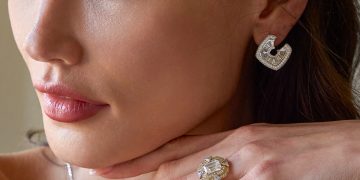
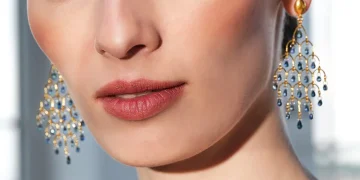
| Drop Earrings | Georgian and Baroque Courts | Girandole three-drop structures featuring filigree backing | Styled with swept-back hair to allow light filtration |
| Brooches | Romanov and Tudor Dynasties | Heavy sculptural pins featuring animal or heraldic motifs | Fastened to the lapel of structured coats or secured on silk scarves |
Frequently Asked Questions
What constitutes the primary difference between genuine antique royal jewelry and modern royal-inspired jewelry?
Genuine antique jewelry refers to pieces created at least one century ago, featuring historical cutting styles like the old European or mine cut, and often showing physical wear consistent with age. Modern royal-inspired jewelry uses contemporary casting and stone-cutting technologies to replicate the design language, silhouettes, and intricate textures of those historic eras while offering the structural integrity, modern warranties, and durability of newly manufactured pieces.
How should modern consumers care for jewelry featuring delicate historic techniques like cannetille or granulation?
Due to the intricate recesses and fine wires used in cannetille and granulation, these pieces should never be exposed to harsh chemical cleaners or ultrasonic machines, which can loosen the delicate components. Instead, clean the items using a soft-bristled toothbrush, warm water, and a drop of mild, oil-free dish soap. Gently brush the surface to remove oil buildup, rinse thoroughly with clean water, and dry the piece completely with a lint-free microfiber cloth.
Why did historic royalty prefer yellow gold over white gold or platinum for their collections?
Historically, white gold was not invented until the early twentieth century, and platinum required melting temperatures that were difficult to achieve consistently before modern industrial torches. Consequently, yellow gold and sterling silver were the primary metals available. Silver was often used to set diamonds to prevent the yellow tint from bleeding into the stones, while yellow gold was reserved for the main body of the jewelry to showcase wealth and durability.
What defines an old mine cut diamond, and why is it trending in royal-inspired designs?
The old mine cut is the historical predecessor to the modern brilliant cut diamond. Developed in the eighteenth century, these stones were faceted entirely by hand under candlelight. They feature a higher crown, a deeper pavilion, a smaller table, and a large, flat facet at the bottom called a culet. This configuration creates chunkier, broader flashes of light rather than the intense, splintered sparkle of modern diamonds, giving the stone a soft, romantic glow that perfectly complements vintage settings.
Are brooches versatile enough to be worn in casual, day-to-day modern outfits?
Brooches are highly versatile accessories that transcend formal wear. Modern styling involves pinning a substantial royal-inspired brooch onto the lapel of a casual denim jacket, securing it to the pocket of a trench coat, or placing it at the center of a buttoned-up oxford shirt. They can also be attached to thick knit beanies, used to secure draped pashminas, or pinned onto the strap of a leather handbag to add an unexpected touch of historical luxury to an otherwise minimalist outfit.
How can someone tell if a baroque pearl is of high quality when buying royal-inspired pieces?
When evaluating baroque pearls, the traditional metrics of perfect roundness are discarded. Instead, look for a strong, mirror-like luster, which refers to the sharpness of the reflections on the surface of the pearl. The presence of orient, an iridescent rainbow-like sheen that shimmers across the irregular curves of the pearl, indicates a thick, healthy layer of natural nacre. The stone should feel heavy for its size and possess a clean surface free of deep, unsightly cracks or chalky patches.